
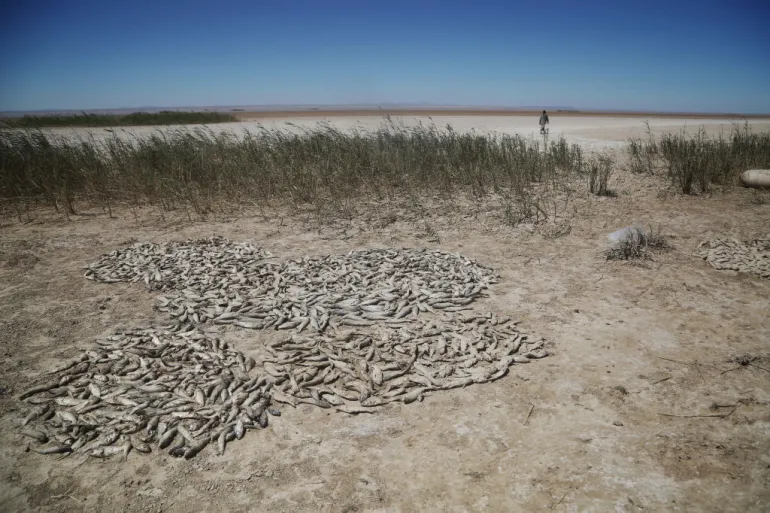
Years of drought, falling rainfall and unsustainable water use have been worsened further by the US-Israel war.
For many Iranians, the most immediate threat is no longer just war, but water.
Years of drought, falling rainfall and unsustainable water use have pushed the country into severe water stress, depleting reservoirs, rivers and groundwater reserves. The US-Israel war on Iran has added further strain after reports of damage to desalination plants, pipelines and other civilian water infrastructure in the early weeks of the conflict.
Iran is classified by the World Resources Institute as facing “extremely high” baseline water stress, using more than 80 percent of its renewable water supplies each year.
In this visual explainer, Al Jazeera breaks down Iran’s worsening water crisis and what is driving it.
How Lake Urmia disappeared
One of the most striking examples of Iran’s water crisis can be seen from space.
A time-lapse display of Lake Urmia in northwestern Iran shows how the largest saltwater lake in the Middle East, which covered nearly 6,000sq km (2,300sq miles) in the 1990s, shrunk to just 581sq km (224sq miles), less than 10 percent of its former size.

Consecutive droughts, agricultural water use, river diversion, and groundwater extraction have transformed vast stretches of Lake Urmia into exposed salt flats.
More than 60 dams built on its feeder rivers choked off inflows, while farmers diverted water into irrigation channels and decades of groundwater extraction drained the aquifers below. Rising temperatures accelerated evaporation as precipitation fell.

Iran’s growing water deficit
To sustain its freshwater resources, a country must replenish at least as much water as it withdraws for agriculture, industry, and household use.
Iran has long been on the wrong side of that equation. Decades of dam construction, intensive farming, and groundwater extraction have pushed consumption far beyond what rainfall can replenish.