

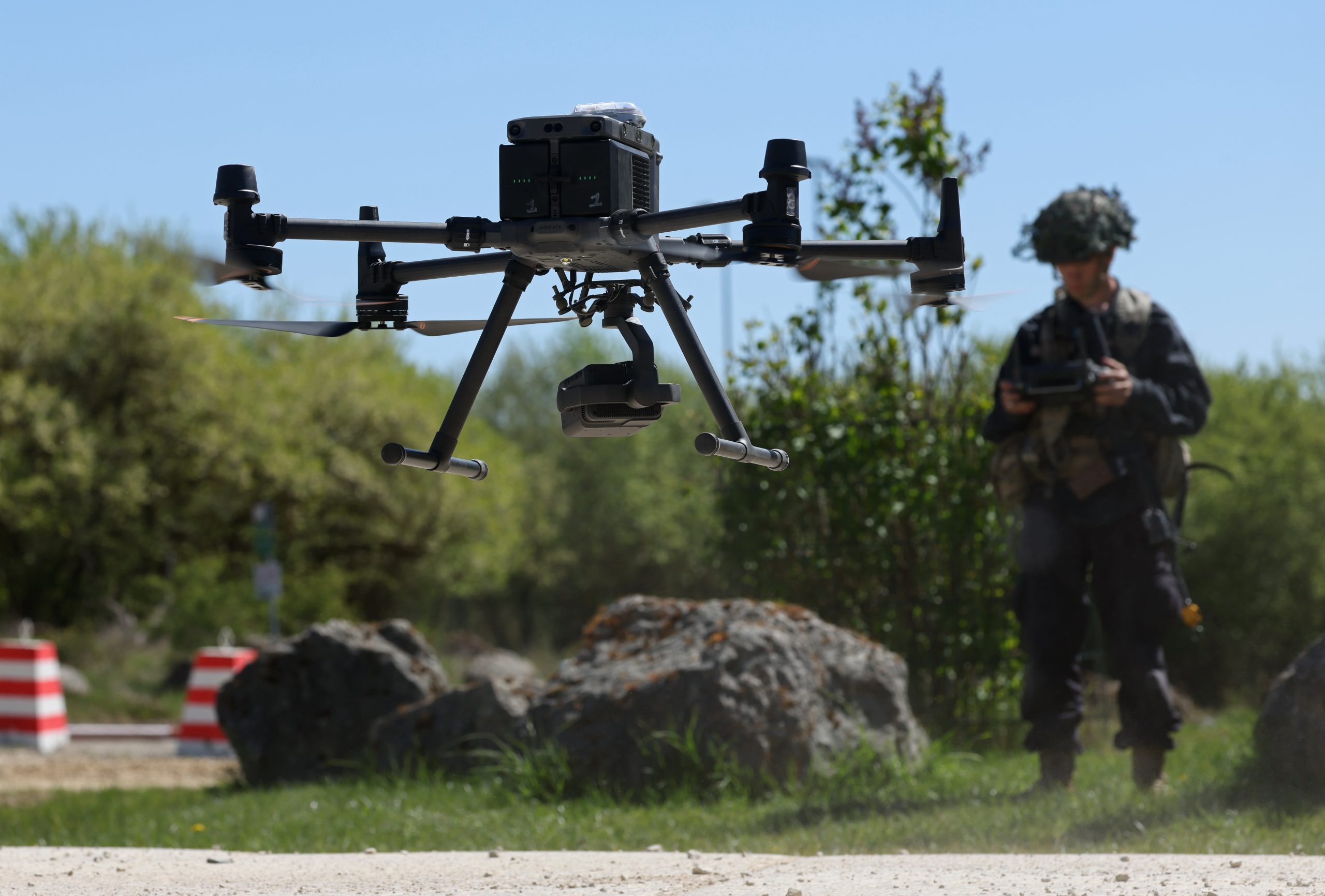
Two leading Republican lawmakers in the United States have criticised the Pentagon’s decision to cut 5,000 troops stationed in Germany, warning that the move could weaken deterrence in Europe and send an encouraging message to Russia.
Roger Wicker and Mike Rogers, who lead the Senate and House armed services committees, said the troops should not be withdrawn from Europe at a time of ongoing tensions with Moscow. Instead, they argued that those forces would be better placed further east, where they could strengthen the alliance’s defensive posture and reassure frontline Nato members.
Their criticism highlights growing concern in Washington that reducing the US military presence in Germany could come at the wrong moment, especially as European allies are increasing defence spending and Russia remains a central security threat.
Pentagon Defends the Decision as Trump Signals More Cuts
The Pentagon said the move followed a broad review of military needs and reflected conditions on the ground. Pentagon spokesperson Sean Parnell said the decision took account of operational requirements in the region and that the withdrawal would be carried out over the next six to twelve months.
President Donald Trump went even further on Saturday, saying the reduction would not stop at 5,000 troops and suggesting that the United States plans to cut back much more sharply. He did not provide further details, but his remarks immediately raised fears that the current move may only be the beginning of a wider retrenchment in Europe.
The United States currently has more than 36,000 active duty troops in Germany, making it by far Washington’s largest military deployment anywhere in Europe. That footprint remains much larger than in Italy or the United Kingdom, and any significant reduction would carry major strategic and symbolic consequences.
German Officials and Nato Seek Clarity
Germany’s Defence Minister Boris Pistorius described the Pentagon’s move as foreseeable, but stressed that the continued presence of American troops in Europe, especially in Germany, remains in the interest of both countries.
His response suggested Berlin had been preparing for the possibility of a reduction, while also making clear that Germany still views the US role as central to European security.
Nato has also reacted cautiously, saying it is seeking clarification from Washington about the troop cut. The alliance is now trying to understand how the decision fits into the broader US approach to Europe at a time when members are already worrying about the strength of transatlantic unity.
Republicans Split Over the Impact
Wicker and Rogers said they were very concerned by the withdrawal decision, especially as European allies are moving toward spending more of their GDP on defence. In their view, scaling back America’s forward presence before those capabilities are fully in place risks weakening deterrence and sending the wrong message to Vladimir Putin.
They argued that maintaining a strong position in Europe is still in the US national interest and said moving the troops eastward would make more sense than pulling them off the continent.
Not all Republicans agreed. Representative Clay Higgins appeared to back the administration’s decision, using the moment to mock the Senate and make light of the move on social media. That split shows that even within Trump’s own party, there is no single view on how much the United States should remain militarily committed to Europe.
Democrats Say the Move Lacks Strategic Logic
Democratic criticism was sharper. Adam Smith, the top Democrat on the House armed services committee, said the decision was not based on any coherent national security strategy or serious analysis. Instead, he suggested it reflected Trump’s political frustrations and personal grudges.
That claim gained extra attention because the troop withdrawal came soon after Trump attacked German Chancellor Friedrich Merz over remarks about the Iran war. Merz had said the United States was being humiliated by Iranian negotiators and accused Washington of lacking a clear strategy. Trump responded by accusing the German leader of not understanding the issue and then soon after the Pentagon announced the troop cut.
That sequence has fuelled suspicion among critics that the move may be driven at least partly by political anger rather than defence planning.
Wider Concerns Grow Across Europe
The latest decision has added to broader anxiety within Nato about the future of the alliance. Trump has also suggested reducing US troop deployments in Italy and Spain, while Washington already cut its presence in Romania last year as part of a shift in military focus towards the Indo-Pacific.
For many European leaders, the concern is not just about numbers, but about the message. If the United States appears less committed to Europe while Russia remains a threat, that could weaken confidence across the alliance.
Polish Prime Minister Donald Tusk warned that the biggest danger to the transatlantic community is not its outside enemies, but the internal weakening of the alliance itself. His comments reflect the fear that such decisions could gradually erode Nato’s cohesion at a critical time.
Defence Spending Has Changed, but Tensions Remain
Trump has often accused Germany of failing to spend enough on defence, calling the country delinquent in the past because it fell below Nato’s benchmark. But that picture has changed in recent years.
Under the governments of Olaf Scholz and Friedrich Merz, Germany has significantly increased defence spending and is now projected to spend more than €105bn on defence in 2027. Overall, Berlin’s defence expenditure is expected to reach 3.1 percent of GDP when broader security-related spending is included, including aid to Ukraine.
Nato has pointed to those developments as proof that Europe is taking on more responsibility. Still, the troop cut has revived fears that even as European states invest more, the US may be reducing its own commitment too quickly.
For critics of the move, that is the central problem. At a moment when Nato is trying to show strength and unity, withdrawing troops from Germany risks creating the opposite impression: a divided alliance, uncertain leadership and a signal to Moscow that Western resolve may be weakening.