

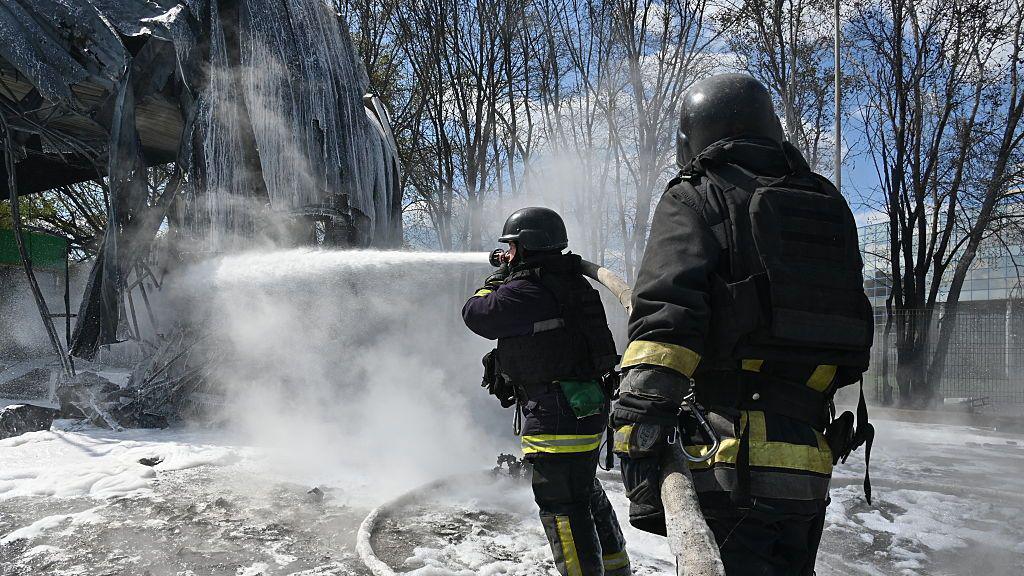
Russian drone and missile attacks across Ukraine killed at least 10 people and wounded 76 more over the past day, according to officials, as Moscow kept up its pattern of aerial strikes on cities and regions across the country.
Deaths were reported in five different regions, underlining the broad reach of the latest wave of attacks. Ukrainian authorities said three people were killed in separate incidents in the Kherson region, while two people died in each of Odesa, Donetsk and Zaporizhzhia. Another person was reported killed in the Sumy region.
Ukraine’s military said Russia launched a ballistic missile and nearly 270 drones, though it claimed most of them were intercepted. Even so, the number of casualties showed the continuing danger posed by the sustained strikes, which have become a regular feature of the war.
Zelensky says Ukrainian drones struck tankers and oil facilities
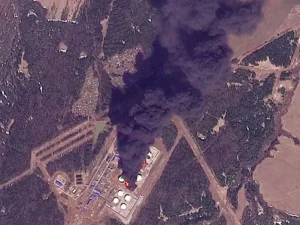
At the same time, Ukrainian President Volodymyr Zelensky said Ukrainian forces had carried out fresh attacks on Russian energy infrastructure, including an oil terminal in northwestern Russia and two oil tankers near the Black Sea port of Novorossiysk.
According to Zelensky, the oil terminal in the Leningrad region near Primorsk suffered major damage, along with three ships at the site. He also said two tankers were hit by Ukrainian drones at the entrance to the port of Novorossiysk.
He described the vessels as part of Russia’s so-called shadow fleet, which he said is used to move oil in ways that avoid Western sanctions. While there were no immediate details on the extent of the damage to the ships, Zelensky made clear that the purpose of the strikes was to disrupt Russian oil transport.
In a message posted on Telegram, he said the tankers had been actively used to move oil and added that now they would not be.
Russia says it also faced a large drone assault
Russia said Ukraine had launched at least 334 drones, with the Leningrad region in the northwest among the main targets. Ukrainian attacks on oil terminals and export sites in that area and elsewhere have increased in recent weeks.
Kyiv says those operations have successfully damaged Russian oil infrastructure and cut into billions of dollars in exports. The strategy appears aimed at raising the economic cost of the war for Moscow by hitting facilities linked to energy revenue.
Russian officials have generally tried to play down the impact of such attacks, but there are signs of concern inside the Kremlin over the growing reach of Ukrainian drones. The repeated strikes deep inside Russian territory have shown that areas far from the frontline are no longer fully out of danger.
Kremlin scales back Victory Day events amid security concerns
That concern appeared to surface publicly this week when the Kremlin announced it would reduce the scale of its annual Victory Day military parade on 9 May.
Russian authorities said the decision was driven by what they described as a terrorist threat from Ukraine. The parade, which marks the Soviet defeat of Nazi Germany in World War Two, is one of the most important symbolic events on Russia’s political calendar.
The move suggests that Ukrainian long-range attacks are having an effect not only on infrastructure, but also on the atmosphere inside Russia. Even if officials avoid publicly acknowledging the full damage, the need to adjust such a major state event points to growing unease.
Fighting intensifies on both sides
The latest developments show the war continuing to escalate in two directions at once. Russia is maintaining heavy aerial pressure on Ukrainian regions, causing civilian deaths and widespread destruction. Ukraine, meanwhile, is pressing its campaign against Russian oil logistics and maritime assets, trying to weaken Moscow’s war economy and extend the battlefield far beyond the front.
For now, both sides are signalling that neither the military pressure nor the strategic targeting is likely to ease soon. The result is another deadly day in a conflict that continues to deepen in both human and economic cost.