

An American and a French national have tested positive for hantavirus after returning home from a cruise ship linked to a deadly outbreak, as authorities step up monitoring of passengers evacuated from the vessel.
The cases emerged after travellers disembarked from the MV Hondius, which is currently docked in Spain’s Canary Islands. Health officials said another American passenger on the repatriation flight had also shown mild symptoms, though both individuals were transported in biocontainment units as a precaution.
In France, Health Minister Stéphanie Rist said one woman was in isolation in Paris and that her condition was worsening. French officials have also identified 22 contact cases linked to her.
The developments have raised concern across several countries, although health authorities continue to say the overall risk of a large-scale outbreak remains low.
Three deaths linked to outbreak on board
The outbreak has already been connected to three deaths among passengers who travelled on the ship. Those who died were a Dutch couple and a German woman. Officials said two of the three had confirmed hantavirus infections.
More than 90 passengers from the vessel are now being repatriated, with different countries arranging separate flights and quarantine measures. The cruise ship had become the focus of an international health response after the illness was traced back to passengers who had travelled in South America.
According to the World Health Organization, some of the Dutch passengers are believed to have contracted the Andes strain of hantavirus while in that region. Unlike many other hantaviruses, this strain can spread between humans, although such transmission is considered uncommon.
Symptoms and health precautions
Hantavirus symptoms can include fever, severe fatigue, muscle pain, stomach pain, vomiting, diarrhoea and shortness of breath. Because of the possibility of human transmission in Andes strain cases, health agencies have moved quickly to isolate, assess and track exposed travellers.
The US Department of Health and Human Services said all 17 US citizens on the repatriation flight would undergo medical evaluation at a facility in Nebraska. Seven other American passengers had already returned earlier and are now being monitored in their home states.
A British national living in the United States was also evacuated with the American group.
Before the US case was confirmed, WHO Director-General Tedros Adhanom Ghebreyesus warned that Washington’s decision not to follow WHO guidance on the outbreak could carry risks. The WHO has recommended 42 days of isolation for those leaving the ship.
Countries take different approaches to quarantine
US health officials have taken a more measured line. Dr Jay Bhattacharya, the acting head of the Centers for Disease Control, said he did not want to create public panic and stressed that human-to-human spread is rare and should not be treated in the same way as Covid.
At the same time, other countries are enforcing stricter measures. In Spain, 14 Spanish nationals flown to Madrid have been placed in mandatory quarantine at a military hospital. More evacuation flights were also scheduled to continue moving passengers from the Canary Islands.
In the United Kingdom, 20 British nationals arrived in Manchester on a chartered flight from Tenerife and were taken to Arrowe Park Hospital in Wirral for a 72-hour isolation period. None had shown symptoms at the time. Two other British nationals with confirmed infections are receiving treatment in the Netherlands and South Africa.
The Netherlands also received a separate flight carrying 26 passengers and crew, including eight Dutch citizens. Other passengers are being sent onwards to Australia and the Netherlands through shared repatriation arrangements involving countries that did not organise their own flights.
International effort continues as officials try to contain risk
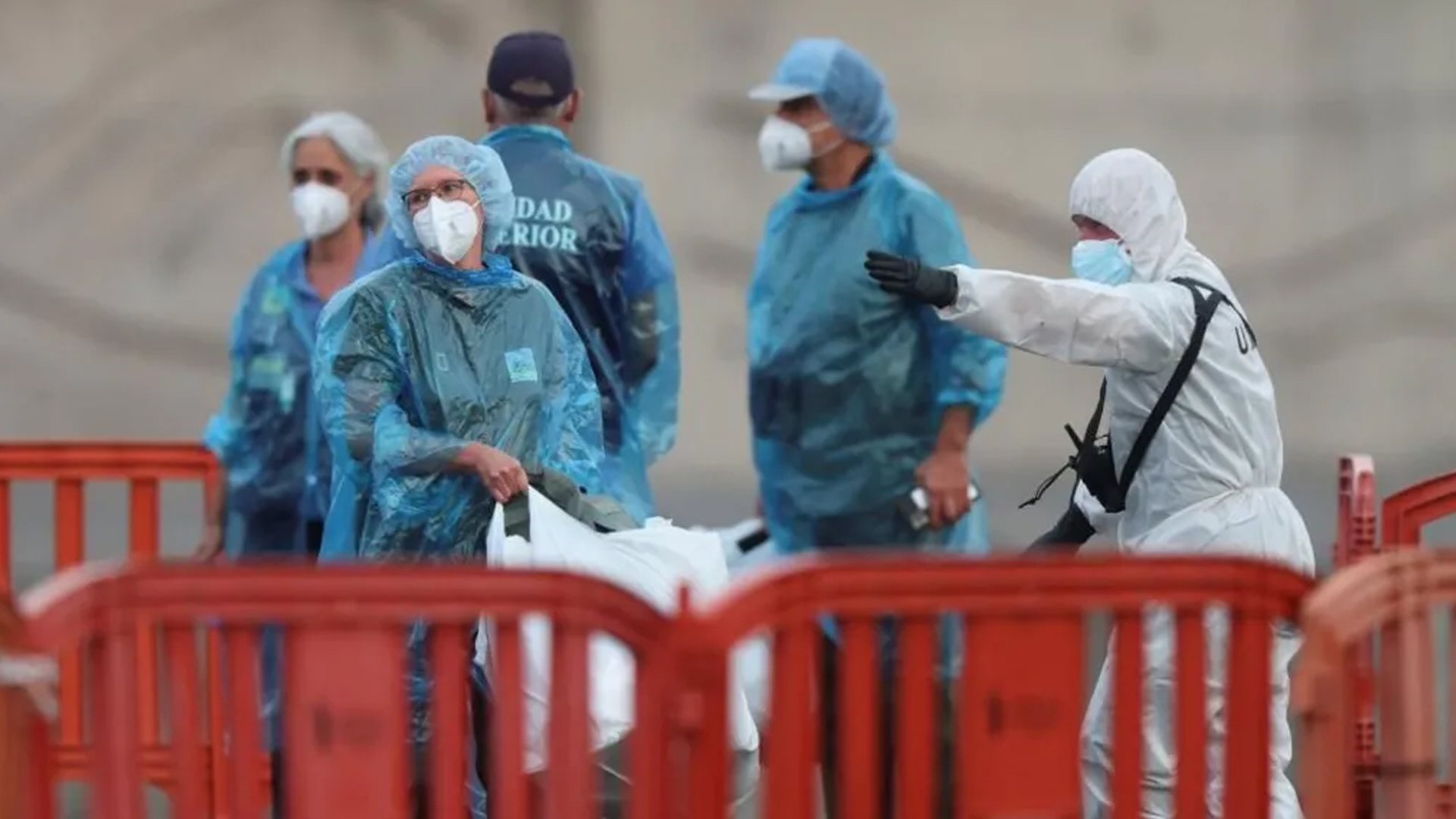
Images from Tenerife showed passengers leaving the ship in blue protective gowns, masks and caps, highlighting the seriousness with which authorities are treating the incident. There were also five French nationals on board the vessel.
Although health officials continue to say a wider outbreak is unlikely, the growing number of confirmed and suspected cases has turned the situation into a multinational public health operation.
For now, authorities are focused on tracing contacts, isolating those at risk and closely monitoring anyone who may have been exposed. The outbreak may still be limited, but the spread of cases across several countries has made clear that the response will need to remain coordinated and cautious in the days ahead.