

Donald Trump has announced that Russia and Ukraine will observe a three-day ceasefire, offering a short pause in the war after both sides accused each other of breaking separate truces linked to celebrations marking the Soviet victory over Nazi Germany.
The US president said the ceasefire would include a halt to all kinetic activity as well as a prisoner exchange involving 1,000 detainees from each side. Soon after his statement, Ukrainian President Volodymyr Zelensky confirmed Ukraine’s participation, while Russian state media also reported that Moscow had agreed to the proposal.
Trump said he had personally asked for the temporary truce and thanked both Vladimir Putin and Volodymyr Zelenskyy for accepting it. The announcement came against a backdrop of renewed battlefield accusations and rising fears that symbolic wartime commemorations could be overshadowed by fresh military escalation.
Earlier ceasefire plans had already come under strain
Before Trump’s announcement, both Russia and Ukraine had already declared separate ceasefires, but each quickly accused the other of breaking them.
Putin had announced a ceasefire for May 8 and 9 ahead of Russia’s Victory Day events, while Kyiv had earlier called for an indefinite truce beginning on May 6. Instead of producing calm, those overlapping proposals became the subject of immediate dispute, with both militaries saying the other side had continued attacking positions and carrying out strikes.
Moscow’s mayor said the Russian capital had been targeted by drones overnight, adding to security fears around the Victory Day parade. At the same time, Zelensky said Ukrainian positions had come under more than 140 attacks in the first few hours of the truce, alongside more than 850 drone strikes. He said Ukraine would respond in kind.
Moscow on alert as Victory Day approaches
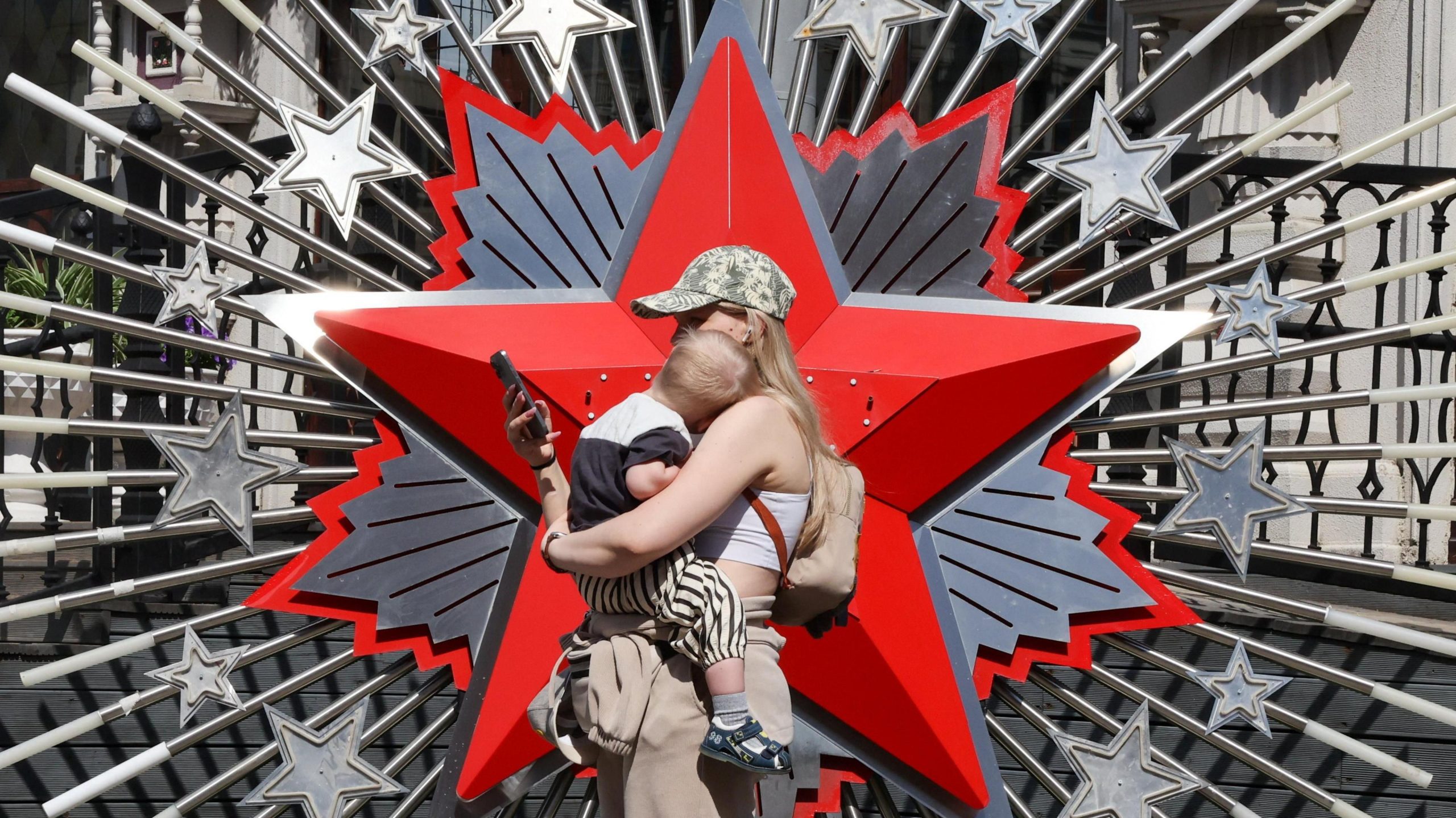
The ceasefire announcement comes at a highly sensitive moment for Russia, which is preparing for its annual Victory Day celebrations in Red Square. Moscow has warned Ukraine not to target the event and threatened a massive missile strike on central Kyiv if such an attack takes place.
Russian authorities have also told foreign diplomats to leave the Ukrainian capital before May 9. Inside Russia, security measures have been tightened further. For the first time in nearly two decades, no military hardware will appear in the Moscow parade, while mobile internet access in Moscow and St Petersburg is being restricted as a precaution.
The event, once a major diplomatic occasion attracting many foreign leaders, is expected to be smaller this year. According to the report, only the leaders of Belarus, Malaysia and Laos, along with a limited number of other dignitaries, are expected to attend.
Both sides continue reporting attacks
Even as the new truce was announced, reports of continued attacks kept emerging from both countries.
Russia’s defence ministry accused Ukraine of striking civilian targets in border regions such as Kursk and Belgorod and said Russian forces had delivered what it called a mirror response. Moscow Mayor Sergey Sobyanin said around 20 drones had been brought down near the city within the first two hours of the earlier ceasefire period. Ukrainian strikes were also reported in industrial regions including Perm and Yaroslavl, as well as in Rostov and in Grozny, the capital of Chechnya. Thirteen airports in southern Russia also suspended operations after drone activity.
Ukraine, meanwhile, continued to say Russian attacks had not stopped. Zelensky’s figures on battlefield assaults and drone strikes suggested Kyiv saw little genuine restraint in the hours before the new US-backed ceasefire was announced.
Diplomacy remains difficult despite new opening
The new ceasefire also comes amid broader diplomatic discussion over how, and by whom, the war might eventually be brought to an end.
European Council President António Costa said there may be potential for the European Union to speak directly with Russia about ending the war and said Zelensky supported such an approach. He argued that Europe would ultimately need to talk to Russia about the future security architecture of the continent because geography cannot be changed.
The Kremlin responded by saying Russia was ready for dialogue, but would not be the side to initiate it. Meanwhile, the United States has already mediated several rounds of talks without securing a breakthrough. Secretary of State Marco Rubio said during a visit to Italy that Washington was still willing to mediate, but did not want to keep spending time if real progress was not being made.
Ceasefire offers a pause, not yet a settlement
Trump’s three-day ceasefire may create a brief opening for reduced violence and prisoner exchanges, but the atmosphere around it remains highly fragile. The fact that both sides were still accusing each other of violations even before the new truce began shows how little trust exists between Moscow and Kyiv.
At the same time, the war continues to unfold beyond the front lines. The report notes that Ukrainian emergency crews are also battling a major wildfire in the Chornobyl exclusion zone, where dry weather, strong winds and landmines left by the conflict are complicating efforts to contain the flames.
For now, the announced ceasefire is a notable development, but not yet a sign that the war is close to ending. It offers a short pause and a prisoner swap, but the deeper conflict, the mutual suspicion and the threat of renewed escalation remain firmly in place.