

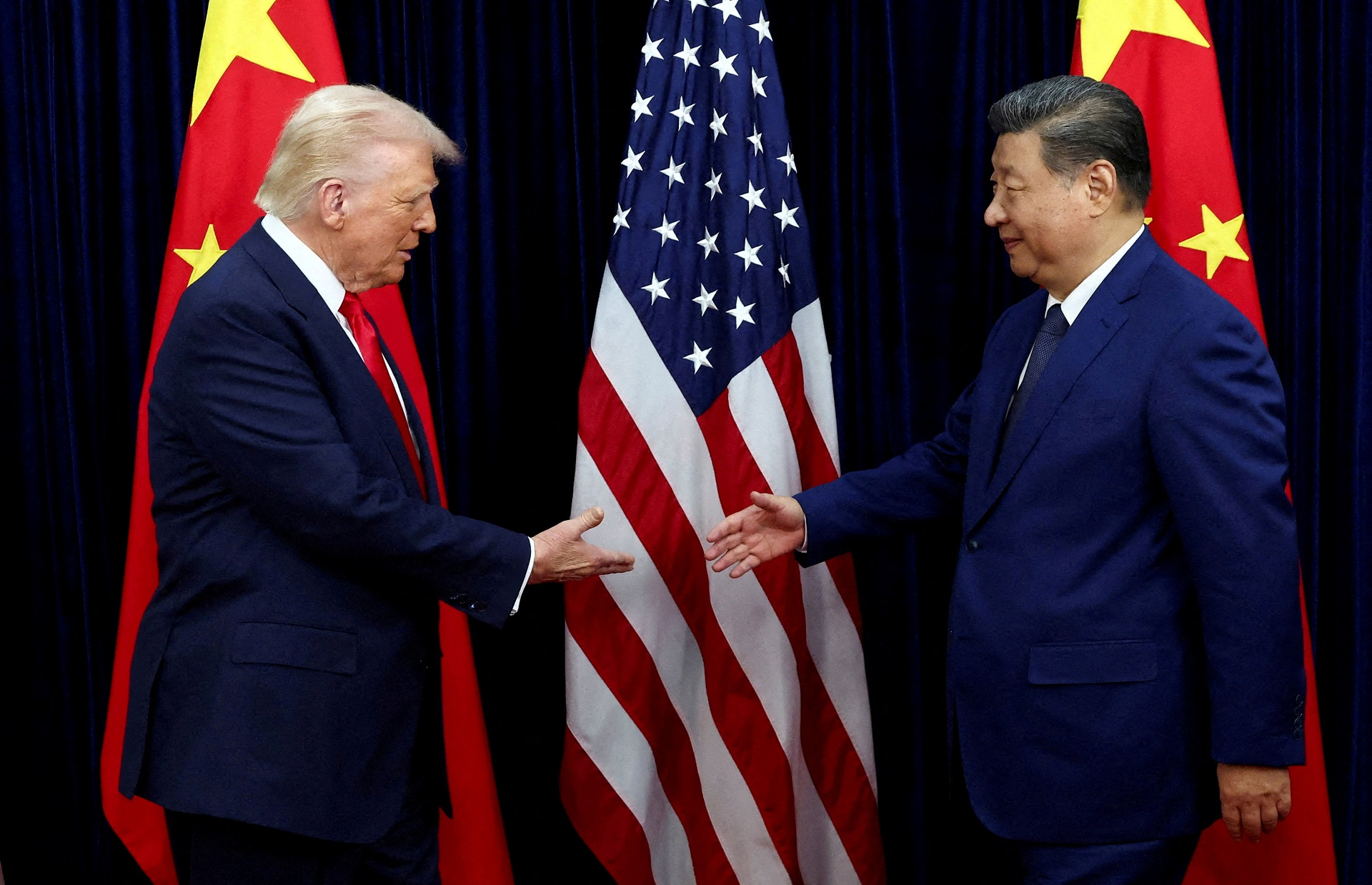
Beijing has confirmed that US President Donald Trump will travel to China from 13 to 15 May to meet President Xi Jinping, marking the first visit to China by a sitting US president in nearly a decade. The trip comes at a sensitive moment for relations between the world’s two largest economies and is being widely seen as a crucial test of the uneasy trade truce now in place between Washington and Beijing.
The visit will also bring a major business dimension. Executives from leading American companies including Boeing, Citigroup and Qualcomm are expected to join Trump, with the possibility of commercial agreements being discussed alongside political talks. That combination of diplomacy and deal-making reflects how closely trade, security and economic rivalry are now intertwined in the US-China relationship.
The trade war still shapes the meeting
The background to the visit is years of escalating trade conflict. Trump first came to office promising to make trade fairer for the United States and to revive domestic manufacturing. In 2018, he imposed tariffs on $250bn worth of Chinese imports, a move many analysts regard as the true start of the trade war. Although China was the main target, he also imposed duties on other major trading partners, arguing that they too had taken advantage of the US.
The shock was especially severe for Beijing, which at that stage depended heavily on exports to the United States. American demand for Chinese manufactured goods played a vital role in supporting jobs, and Trump’s tariff strategy threatened that model at a time when China was already dealing with weak domestic consumption, high unemployment and a prolonged property crisis.
When Joe Biden entered office in 2021, he largely kept the pressure in place. According to the report, Biden did not remove Trump’s tariffs on China and also introduced further restrictions on Chinese firms, including Huawei and TikTok, while sharply limiting Chinese electric vehicles in the US market. Some analysts quoted in the article argued that in important ways Biden was even more protectionist than Trump.
Trump’s return brought a sharper tariff push
After returning to office in 2025, Trump expanded his tariff approach even further. He imposed 20 percent tariffs on China over fentanyl-related accusations and then added a 34 percent levy on Chinese goods on what he called Liberation Day. Those moves helped push duties on Chinese imports above 100 percent during the latest phase of the standoff.
The impact was immediate. Chinese businesses were shaken, goods began piling up in warehouses and US firms started scrambling for alternative suppliers. Beijing answered with retaliatory measures of its own, including duties on US farm products, directly targeting one of Trump’s most important political constituencies.
But the article also points out that Washington ran into a serious constraint. China’s near-monopoly over rare earths, which are essential for products ranging from smartphones to fighter jets, made a prolonged confrontation more risky for the United States than Trump may have anticipated. That imbalance helped push both sides back towards bargaining.
The current truce is real, but still incomplete
A face-to-face meeting between Trump and Xi in October led to a temporary easing of tensions. China suspended export controls on rare earths, which the article describes as a major gain for Trump. He in turn said Beijing had agreed to start buying American farm goods immediately. Washington also rolled back part of the tariffs connected to fentanyl and paused further increases in reciprocal duties. Restrictions on some semiconductor sales to China were loosened as well, although the most advanced chips remained off limits.
That produced a truce, but not a final settlement. The current visit is therefore not about celebrating a resolved dispute. It is about testing whether the pause can hold and whether either side is willing to make compromises strong enough to turn a temporary arrangement into something more durable.
China enters the talks from a stronger position than before
One reason this meeting is so important is that the balance between the two sides has shifted somewhat since the earlier phase of the trade war. The article notes that China’s exports have reached record levels, helped by new trading partners around the world as ties with the US weakened. Beijing has also kept investing heavily in robotics and in domestic chip development, trying to reduce dependence on Western firms such as Nvidia.
That means China arrives at the talks with more resilience than it once had. It still needs the US market because no other consumer base is as large, but it is no longer entering the room from the same level of vulnerability as before. At the same time, Trump is dealing with legal and political setbacks at home after US courts struck down parts of his tariff programme, forcing him to use other legal tools to keep some of the levies in place while new investigations continue.
Iran will also loom over the talks
Although trade is central, the article makes clear that Iran will also hang over the Trump-Xi summit. China has so far managed the economic impact of the Iran war better than many neighbours because it is itself a major oil producer and because much of its imported crude comes from Russia. Even so, Beijing remains Iran’s biggest oil customer, and the longer the conflict drags on, the more it tests China’s energy security and supply chains.
That gives both Washington and Beijing reasons to want the conflict brought under control, even if they differ sharply in their views on Iran and on how peace should be pursued. The summit will therefore be watched not only for signs of progress on tariffs and trade, but also for clues about whether the two powers can find any common ground on a war that is affecting markets far beyond the Middle East.
A summit with much to prove
Trump’s trip to China is set to be more than a diplomatic photo opportunity. It comes at a time when the trade truce is still fragile, the tariff war is unresolved, global supply chains remain exposed, and the Iran conflict is adding another layer of strain to the global economy.
The meeting offers both leaders a chance to stabilise a relationship that remains deeply competitive and frequently confrontational. But it also comes with major risks. If no progress is made, the current truce could look more temporary than ever. If the visit does produce movement, it could become a turning point not only in trade, but in how the US and China manage their broader rivalry.
For now, the central question remains open: whether this visit can strengthen a fragile pause, or whether it will simply expose how much mistrust still lies beneath it.