

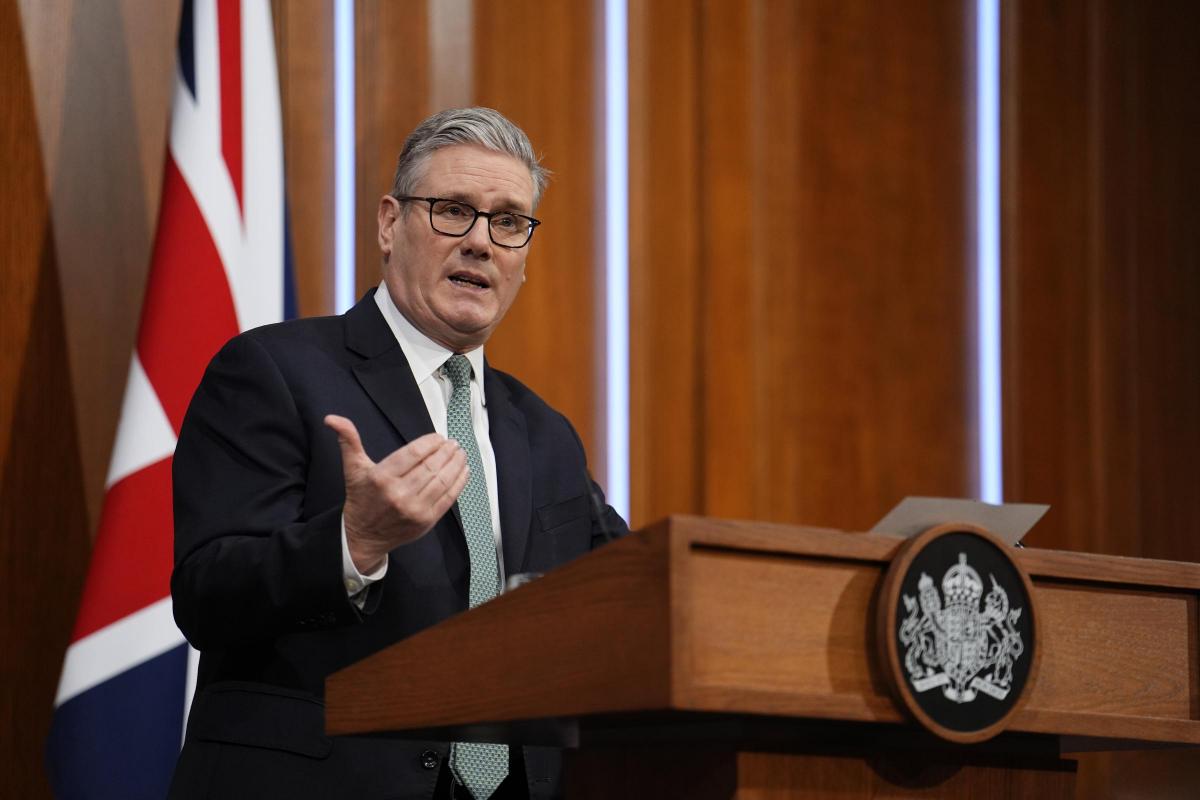
Sir Keir Starmer is fighting to remain prime minister as anger inside Labour intensifies, with critics from across the party, including some within government, pushing for change after a bruising set of election results. What began as frustration after a poor electoral performance has now turned into a broader leadership crisis, with pressure building on Starmer to either step aside or set out a timetable for his departure.
At the centre of the latest turmoil is a revolt among Labour MPs and growing impatience from senior figures in government. The most immediate question is no longer whether Starmer is under pressure, but whether he can hold on long enough to regain control of a party now openly discussing life after him.
Starmer refuses to quit and challenges rivals to act
Despite the mounting unrest, Starmer has made clear that he does not intend to resign. At his weekly cabinet meeting, he reportedly told ministers that he would stay on and effectively challenged any rivals to launch a formal bid against him if they wanted him removed.
Under Labour rules, any such challenge would require support from 81 MPs, or 20 percent of the parliamentary party. So far, no one has formally made that move. That gives Starmer some breathing space, but not much political comfort, because the internal mood appears to be shifting quickly.
After the cabinet meeting, several close allies tried to project calm. Housing Secretary Steve Reed and Work and Pensions Secretary Pat McFadden both made clear that they were continuing to support the prime minister. Foreign Office Minister Jenny Chapman also sought to steady the mood, saying there had been discussion around Starmer’s leadership but insisting that no minister had directly challenged him at the cabinet table.
Silence and pressure inside the cabinet add to uncertainty
Even with those supportive statements, the mood inside the government looks unsettled. Home Secretary Shabana Mahmood is reported to be among cabinet ministers urging Starmer to set out a departure timetable, a sign that discontent has moved well beyond the party’s fringes.
At the same time, the silence of some senior figures has been as politically meaningful as the words of others. Health Secretary Wes Streeting, widely seen as a possible successor, declined to comment to reporters as he left Downing Street. In moments like this, silence can speak almost as loudly as open criticism, especially when leadership speculation is already running high.
The pressure has also already produced one clear resignation. Communities minister Miatta Fahnbulleh became the first government member to step down, marking a significant moment in the crisis and raising the possibility that others could follow if the pressure continues to mount.
Labour MPs grow louder as possible successors emerge
The revolt against Starmer is no longer a small internal grumble. Nearly 80 Labour MPs have now publicly urged him either to resign immediately or to start preparing for an orderly exit. That level of dissent shows how serious the crisis has become, even if it has not yet crystallised into a formal leadership challenge.
Attention is already turning to who could replace him. Alongside Wes Streeting, former deputy prime minister Angela Rayner is seen as one of the most likely challengers from within the parliamentary party. Greater Manchester Mayor Andy Burnham also has visible support, though he is not currently an MP, which would make any bid more complicated and likely slower to organise.
This has created an unusual political situation. Starmer remains leader for now, but the conversation inside Labour is increasingly focused on succession, not recovery.
Election losses pushed the crisis into the open
The trigger for the current rebellion was Labour’s disastrous performance in elections last week. The party lost almost 1,500 councillors in local elections across England, was removed from power in Wales and fell to its worst ever result in a Scottish Parliament election.
Those results were widely viewed as a crucial test of Starmer’s leadership at a time when Labour was already struggling with poor poll numbers. Instead of steadying the party, the elections appear to have convinced many MPs that the current direction is failing badly.
The crisis was then made worse by Starmer’s attempt to regain control. He delivered a hastily arranged speech on Monday designed to shore up his position, but the move appears to have backfired. Rather than calming nerves, it seems to have accelerated the rebellion, with more MPs calling for him to go in the hours that followed.
Judgement questions add to the political damage
The election fallout is not the only issue hanging over Starmer. The article also notes continued anger over his decision to appoint Peter Mandelson as US ambassador, a move that has led some MPs to question his political judgement.
That matters because leadership crises rarely grow from one event alone. They build when political weakness, poor results and questions of judgement start feeding into each other. In Starmer’s case, the election losses appear to have turned longer-running concerns into open resistance.
A leadership crisis that is no longer easy to contain
For now, Starmer is still in Downing Street, still refusing to quit, and still daring opponents to organise the numbers needed to force him out. But the political reality is becoming harder to control.
He may not yet be facing a formal challenge, but he is facing something nearly as dangerous: a party that is steadily losing confidence in his ability to recover. Cabinet tension, public calls for his exit and open discussion of potential successors all suggest that Labour’s leadership crisis has moved into a more serious phase.
The next question is whether Starmer can regain authority before that unrest hardens into a full challenge. At the moment, the numbers are not quite there to remove him. But the direction of travel inside Labour is becoming increasingly difficult to ignore.