

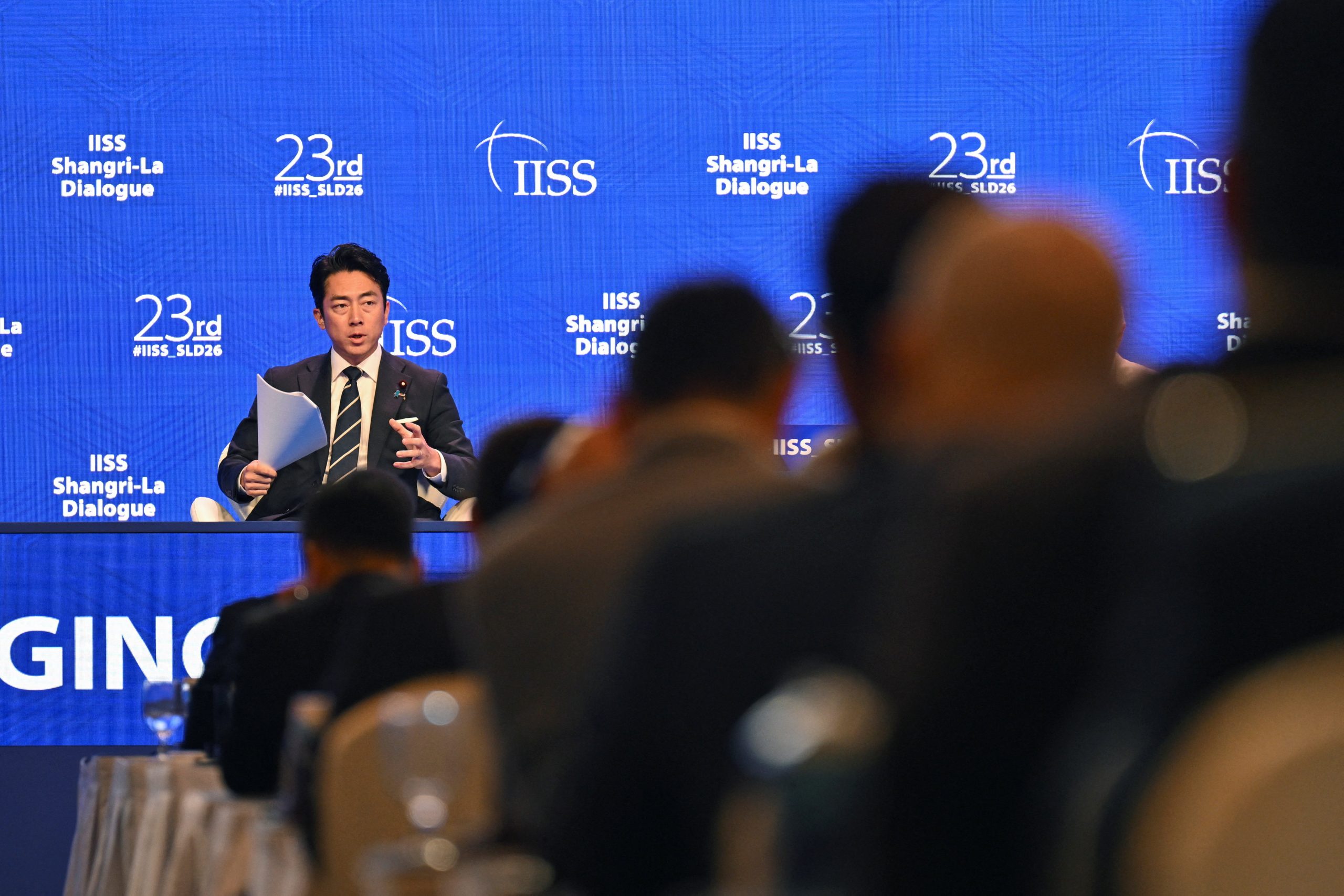
Japan defence minister, Shinjiro Koizumi, has rejected China’s claim that Japan is moving toward “new militarism”, saying Beijing’s own military expansion should be the real concern for the international community.
Speaking at the Shangri-La Dialogue defence summit in Singapore, Koizumi said China’s large weapons stockpile, rapid military growth, and lack of transparency have raised serious concerns in Japan and across the region.
His comments marked one of Tokyo’s strongest responses so far to Beijing’s repeated criticism of Japan’s rising defence spending under Prime Minister Sanae Takaichi.
China Warns Against Japan’s Military Expansion
The dispute comes amid long-running tensions between Japan and China, shaped in part by Japan’s invasion of China during World War Two.
Before the Singapore summit began, Chinese defence ministry spokesperson Jiang Bin warned that Japan was becoming remilitarised. He urged the international community to contain what Beijing described as Japan’s return to militarism.
Japan, however, says its defence plans are not aggressive. Tokyo argues that it is strengthening its military capability only to respond to new security threats and help maintain regional peace.
Japan Defends Record Defence Spending
Japan has increased its defence budget for 12 straight years. Its latest budget, approved in December, is worth more than 9 trillion yen, or about $57bn. That brings Japan closer to its goal of spending 2 percent of GDP on defence.
Koizumi said it is natural for countries to update their defence capabilities when security conditions change. He promised that Japan would explain its defence plans clearly and continue dialogue with other countries.
He also told regional officials that Japan would move forward with transparency, especially because several Asian countries still carry painful memories of Japan’s wartime actions.
Koizumi Says China’s Arsenal Raises Bigger Questions
Koizumi rejected the idea that Japan is returning to militarism, saying the accusation is far from reality.
He pointed to China’s nuclear weapons and strategic bombers, saying Japan has neither. He questioned why Japan is being accused of militarism while China continues to expand its military power.
After his speech, a Chinese military representative asked whether Japan would apologise to China, South Korea, and Southeast Asian victims of World War Two.
Koizumi avoided a direct answer and instead criticised China’s defence spending and military behaviour. He said Beijing’s activities remain a serious concern for Japan and the wider international community, but added that Japan’s door remains open for communication with China.
Wartime History Remains a Sensitive Issue
Japan’s wartime past remains a difficult issue in its relations with China and other Asian countries. Beijing has often said Japan’s past apologies were not enough.
Koizumi’s father, Junichiro Koizumi, issued several apologies when he served as Japan’s prime minister. However, debate over Japan’s wartime responsibility continues to influence regional diplomacy.
The issue has become more sensitive as Japan increases defence spending and considers changes to its post-war security policy.
Takaichi Moves to Strengthen Japan’s Defence
Prime Minister Sanae Takaichi has taken major steps to expand Japan’s defence posture since taking office in October 2025.
Japan plans to invest in new surface-to-ship missiles, unmanned drones, and underwater defence systems. Tokyo has also relaxed rules that allow the country to sell lethal weapons to other nations, a move aimed at strengthening its defence industry.
The government is also expected to revise key security documents by the end of the year.
Takaichi has also supported debate over revising Article 9 of Japan’s constitution, the pacifist clause that renounces war. Any move to change that clause would be highly controversial inside Japan.
Taiwan Comments Add to Tensions
Relations between Tokyo and Beijing worsened in November after Takaichi suggested Japan could respond with its Self-Defence Forces if China attacked Taiwan.
China strongly criticised the remarks, viewing them as interference in one of its most sensitive issues. Beijing claims Taiwan as its own territory, while Japan sees stability in the Taiwan Strait as important to regional security.
The Taiwan issue has become one of the biggest sources of tension between China, Japan, and the United States.
Japan Divided Over Defence Shift
Inside Japan, the government’s defence plans have sparked a major debate. Supporters say Japan must prepare for threats from China and other regional risks. Critics worry that expanding military power could increase tensions and weaken Japan’s post-war pacifist identity.
Anti-war protests have taken place across the country in recent months, with some becoming among the largest Japan has seen in decades.
For now, Tokyo insists its military expansion is defensive. But as China continues to accuse Japan of reviving militarism, and Japan points to China’s growing arsenal, tensions between the two Asian powers show little sign of easing.