

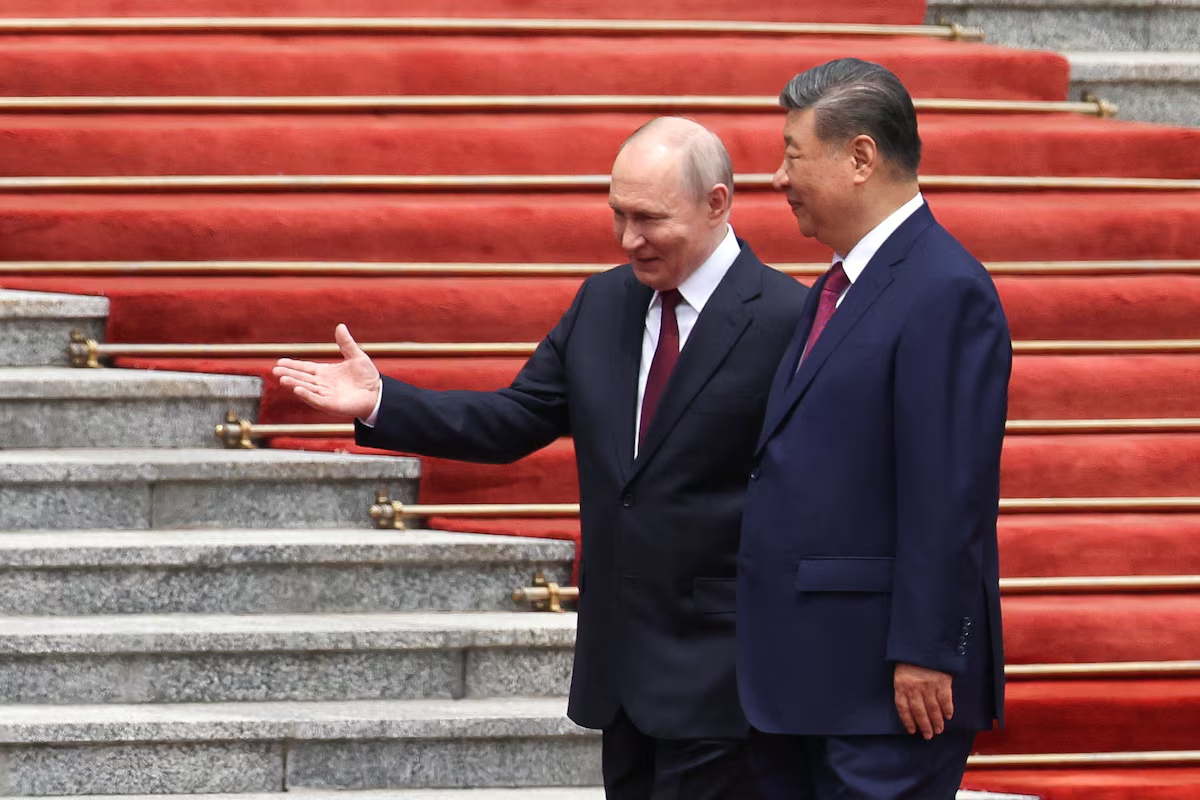
Chinese President Xi Jinping has placed himself at the center of global diplomacy by hosting Russian President Vladimir Putin only days after welcoming United States President Donald Trump to Beijing.
Putin’s arrival at the Great Hall of the People came with the full display of Chinese state ceremony, including cheering children, military guards, cannon fire, and a marching band. The scene closely resembled the welcome given to Trump just days earlier, sending a clear message that Beijing wants to be seen as a place where major world powers come to talk.
Beijing Sends a Message to the World
For China, the back-to-back visits are more than protocol. They show how Beijing wants to present itself as an independent global power that can speak with all sides without being tied to any one camp.
Analysts say China’s massive economy and rising diplomatic confidence have helped shift global attention toward Beijing. Instead of acting directly to solve every conflict, China often uses its influence gradually, positioning itself as an important player in a changing world order.
The image is powerful: Xi hosting two major leaders within days, while both Trump and Putin deal with serious challenges at home and abroad.
Putin Needs China More Than Before
Although Xi welcomed both leaders in similar style, the politics behind the meetings were very different. Putin has visited China many times and has built a close relationship with Xi, but Russia’s position has become more difficult since the war in Ukraine.
Western sanctions and diplomatic isolation have pushed Moscow closer to Beijing. China is now Russia’s top trading partner and one of its biggest buyers of oil and gas. This makes Beijing extremely important for Russia’s economy.
During the latest talks, China and Russia signed more than 20 agreements covering areas such as trade and technology. However, there was still no final approval for a major Russian gas pipeline that Putin has been seeking for years. That shows the partnership remains important, but also unequal.
Xi Holds a Stronger Hand
China appears to have more leverage than Russia in the relationship. Beijing can buy Russian energy, expand trade, and gain access to resources, while Moscow has fewer options because of Western pressure.
Xi also seemed confident in his dealings with Trump. China’s control over rare earth minerals, advanced manufacturing, and strong global trade links has given Beijing more bargaining power.
Trump’s unpredictable foreign policy has also helped China position itself as a more stable partner for countries looking to balance their relationships with Washington.
China’s Image Has Changed Quickly
The current diplomatic spotlight marks a major change from just a few years ago. During the pandemic, China faced closed borders, criticism from Western governments, and growing concern over issues such as Xinjiang and Hong Kong.
At that time, Beijing’s aggressive diplomatic style, often called “wolf warrior” diplomacy, increased tensions with Western countries and regional neighbors.
Since then, China has adjusted its approach. It has worked to repair relations with countries such as Australia, Canada, and the United Kingdom. World leaders have also returned to Beijing to seek trade deals and stronger ties with the world’s second-largest economy.
Xi Uses the Moment at Home and Abroad
For Xi, the visits from Trump and Putin support his long-standing message about China’s rise and national revival. Domestically, the images help present him as a powerful leader whom other world leaders want to meet.
Internationally, they support Beijing’s claim that China is now an essential part of global diplomacy and trade. Rather than being treated as a country to contain, China is increasingly being treated as a power that must be engaged.
Ukraine Silence Raises Questions
Despite the strong diplomatic image, China still faces limits. During Putin’s visit, Xi spoke about the urgency of ending the war in Iran, but he did not directly address Russia’s invasion of Ukraine.
That silence could create problems for China’s relationship with Europe. Beijing says it wants to play a balanced role in global affairs, but its reluctance to pressure Moscow makes some European leaders question whether China can truly act as a neutral power.
China has tried to maintain a careful position on Ukraine, but the United States and Europe continue to urge Beijing to stop supporting Russia’s economy. At the same time, China does not want to see Putin weakened too much, because Russia remains an important strategic partner.
Iran Conflict Matters More to Beijing
China’s stronger focus on Iran is linked to its own interests. The conflict has affected energy routes, including the Strait of Hormuz, a key passage for global oil shipments. Any long-term disruption could hurt China’s economy, which depends heavily on imported energy.
This explains why Beijing is more vocal about ending the war in Iran while staying quieter on Ukraine. However, that difference may damage China’s credibility as it tries to present itself as a responsible global power.
Xi’s Challenge Is Not Over
The past week has given Xi a major diplomatic win. By hosting Trump and Putin in quick succession, he has shown that China is now central to many of the world’s biggest political conversations.
Still, Beijing faces a difficult path. Many countries remain cautious about China’s authoritarian political system and its growing influence. Xi may be enjoying the spotlight now, but turning diplomatic attention into lasting trust will be a much harder task.