
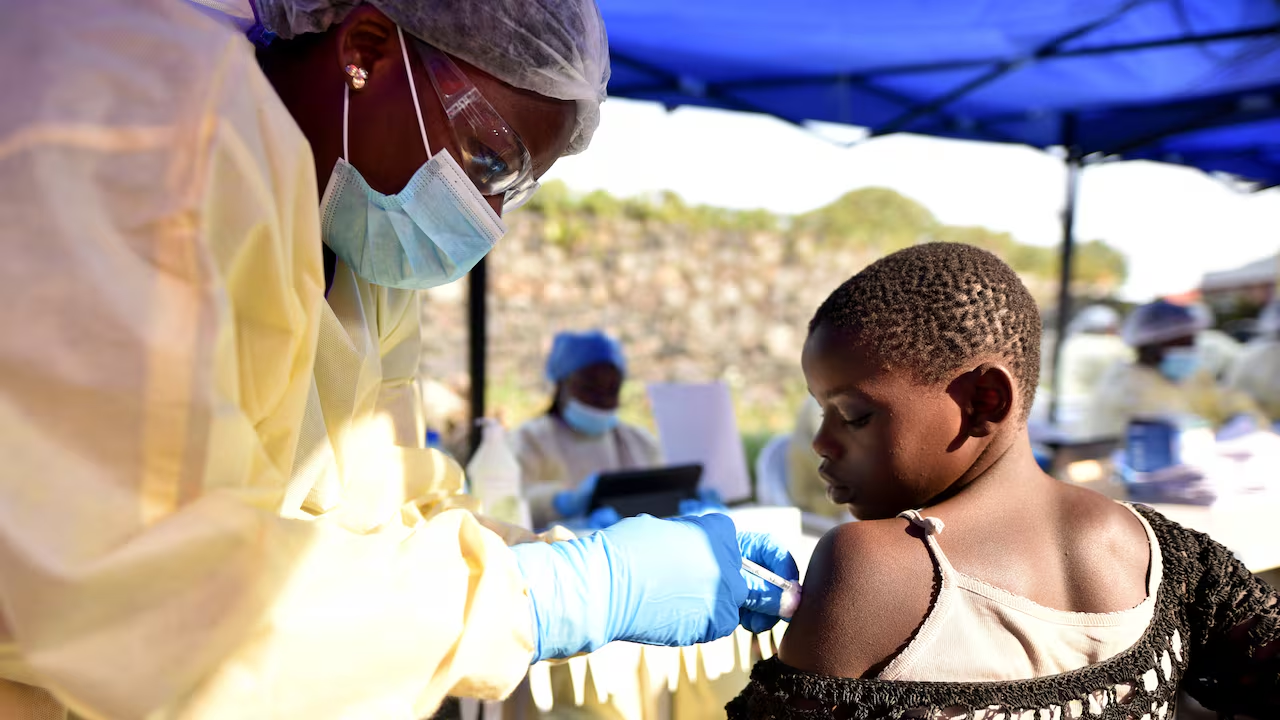
The World Health Organization has declared the Ebola outbreak in the Democratic Republic of Congo a public health emergency of international concern, warning that the situation could be more serious than current reports suggest.
The outbreak is centred in eastern DR Congo’s Ituri province, where health officials have reported about 246 suspected cases and 80 deaths. Although the WHO said the outbreak does not meet the criteria for a pandemic emergency, it warned that there is a significant risk of local and regional spread.
The current outbreak is caused by the Bundibugyo strain of Ebola, a rare form of the virus for which there are no approved vaccines or specific treatments.
Cases Reported Across Several Health Zones
According to the WHO, eight laboratory-confirmed cases have been detected so far. Suspected infections and deaths have been reported across three health zones, including Bunia, the capital of Ituri province, as well as the gold-mining towns of Mongwalu and Rwampara.
One case has also been confirmed in Kinshasa, DR Congo’s capital. Health officials believe the patient had travelled from Ituri.
The outbreak has also crossed the border into Uganda, where two confirmed cases have been reported. Ugandan authorities said one of the patients, a 59-year-old Congolese man, died after testing positive for Ebola.
Reports also said a laboratory confirmed a case in Goma, an eastern city currently controlled by M23 rebels.
WHO Warns of Hidden Spread
WHO Director-General Dr Tedros Adhanom Ghebreyesus said there are still major uncertainties over the true number of infected people and the full geographic spread of the outbreak.
The agency said several factors are making the situation more dangerous. These include insecurity in eastern DR Congo, the humanitarian crisis, high population movement, urban outbreak locations, and the presence of many informal healthcare facilities.
Countries bordering DR Congo are considered at high risk because of regular trade, travel, and cross-border movement.
Emergency Measures Recommended
The WHO has urged DR Congo and Uganda to set up emergency operation centres to coordinate monitoring, contact tracing, and infection-prevention measures.
The agency said confirmed Ebola patients should be isolated and treated until they test negative twice for the Bundibugyo virus, with the two tests taken at least 48 hours apart.
Neighbouring countries have also been advised to strengthen disease surveillance, improve health reporting, and prepare response systems near affected border areas.
However, the WHO warned countries outside the affected region not to close borders or restrict travel and trade. The agency said such measures are often driven by fear and are not supported by science.
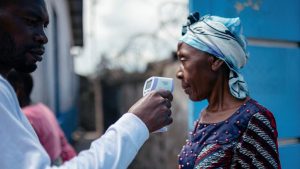
What Is Ebola?
Ebola is a rare but severe viral disease that can be deadly. It is believed to begin when humans come into contact with infected wild animals, such as fruit bats, before spreading between people.
The virus spreads through direct contact with infected bodily fluids, including blood and vomit. It can also spread through contaminated materials.
Early symptoms often include fever, headache, tiredness, muscle pain, and sore throat. As the illness progresses, patients may experience vomiting, diarrhoea, rash, and in some severe cases, bleeding.
Symptoms usually appear between two and 21 days after infection.
Bundibugyo Strain Has No Approved Vaccine
The Bundibugyo strain is one of the Ebola virus species known to cause outbreaks. Previous Bundibugyo outbreaks have had fatality rates ranging from 30 percent to 50 percent.
While vaccines exist for the Zaire strain of Ebola, there is currently no approved vaccine for the Bundibugyo strain. There is also no proven cure for Ebola, although supportive medical care can improve survival chances.
The WHO estimates Ebola’s average fatality rate at around 50 percent.
DR Congo Faces Its 17th Ebola Outbreak
Ebola was first identified in 1976 in what is now DR Congo. Since then, the country has faced repeated outbreaks, making it one of the most affected nations in the world.
This is DR Congo’s 17th recorded Ebola outbreak. Its deadliest outbreak took place between 2018 and 2020, when nearly 2,300 people died. Last year, another outbreak in a remote area killed 45 people.
Across Africa, about 15,000 people have died from Ebola over the past five decades.
Conflict and Movement Complicate the Response
Health experts say the response may be difficult because the outbreak is unfolding in areas affected by insecurity and armed conflict.
Africa CDC has expressed concern about the risk of wider spread, especially because Bunia and Rwampara are urban areas, while Mongwalu is linked to mining activity and frequent population movement.
Dr Jean Kaseya, Africa CDC’s executive director, said regional coordination is essential because people regularly move between affected areas and neighbouring countries.
With confirmed cases now reported beyond DR Congo, health officials are racing to contain the outbreak before it spreads further across the region.