

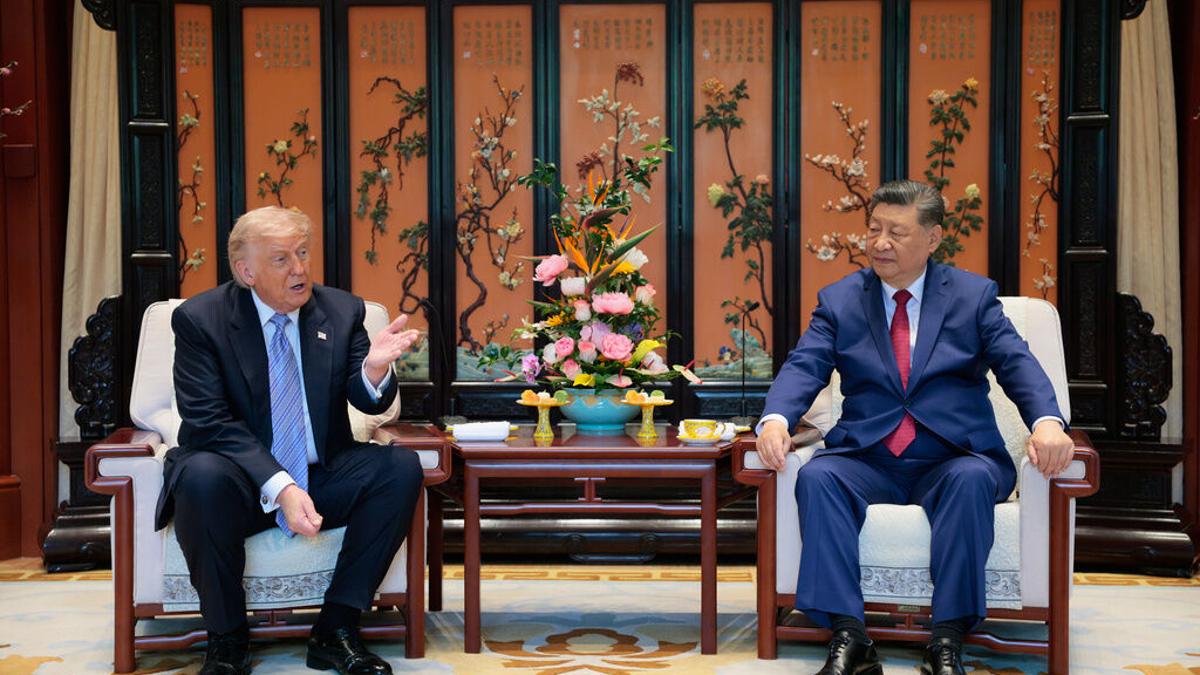
US President Donald Trump has warned Taiwan against formally declaring independence from China, shortly after ending a two-day summit with Chinese President Xi Jinping in Beijing. Trump said he was not seeking to support a move toward independence and urged both sides to avoid actions that could raise tensions.
Speaking in an interview with Fox News, Trump said he wanted the situation to “cool down” and made clear that Washington’s long-standing position on Taiwan had not changed. The United States does not officially support Taiwan’s independence, although it continues to maintain close unofficial ties with Taipei.
Taiwan Remains a Sensitive Issue in US-China Relations
Taiwan has long been one of the most difficult issues between Washington and Beijing. China considers the self-governing island part of its territory and has not ruled out using force to take control of it.
During his meeting with Trump, Xi reportedly stressed that Taiwan is the most important issue in China-US relations. Chinese state media said Xi warned that if the matter is handled poorly, it could push the two countries toward serious confrontation.
Trump later told reporters that he and Xi had discussed Taiwan “a lot,” but he declined to say whether the United States would defend the island if China launched an attack.
Trump Says No Commitment Was Made
Trump said he made “no commitment either way” during his discussion with Xi. He also suggested that the US was not looking for another distant war, saying he did not want Washington to be drawn into a conflict thousands of miles away.
The comments reflect the careful balance the US has tried to maintain for decades. Washington recognises only one Chinese government, but under US law it is required to help Taiwan maintain the ability to defend itself.
Taiwanese President Lai Ching-te has previously said Taiwan does not need to declare independence because it already views itself as a sovereign nation. Many people in Taiwan support keeping the current status, where the island neither formally declares independence nor reunifies with China.
Arms Sales Remain Unresolved
Trump also said he would soon decide whether to approve a major US weapons sale to Taiwan. The proposed package has strong support in the US Congress, but Beijing strongly opposes American arms sales to the island.
China views US military support for Taiwan as interference in its internal affairs. The US, however, sees arms sales as part of its commitment to maintaining stability in the Taiwan Strait.
Trump said he had discussed the issue with Xi in detail but had not yet made a final decision.
Taiwan Seeks Clarity From Washington
Taiwanese officials responded cautiously to Trump’s remarks. Deputy Foreign Minister Chen Ming-chi said Taipei would need to clarify the exact meaning of the US president’s comments.
Chen also said arms sales between the US and Taiwan remain an important part of regional peace and stability. Taiwan’s foreign ministry said it would continue strengthening ties with Washington and other partners while monitoring the outcome of the US-China summit.
Taiwan’s Foreign Minister Lin Chia-lung said Taipei had maintained close communication with the US and other countries to protect Taiwan’s interests. He also accused China of increasing regional risks through military pressure and authoritarian actions.
China’s Military Pressure Continues
China has increased military drills around Taiwan in recent years, raising concern across the region. These exercises have tested the balance between Washington’s support for Taipei and its effort to avoid direct conflict with Beijing.
Beijing has repeatedly criticised Taiwan’s leadership, calling President Lai a separatist and accusing him of threatening peace across the Taiwan Strait.
The issue has also caused tension in US diplomacy. In early 2025, the US State Department removed a statement from its website that clearly repeated Washington’s opposition to Taiwan independence. Beijing criticised the move, saying it sent the wrong message to separatist forces.
US officials later said Washington continued to oppose any unilateral change to the status quo by either side.
Trump’s Warning Highlights Fragile Balance
Trump’s remarks show how sensitive the Taiwan issue remains after his summit with Xi. While the US continues to support Taiwan’s self-defence, Trump signalled that he does not want Taipei to interpret American backing as encouragement to declare formal independence.
For Beijing, Taiwan remains a core national issue. For Taipei, maintaining support from Washington is vital as China increases pressure around the island.
The latest comments suggest that Trump is trying to avoid a direct clash with China while keeping US policy flexible. But with arms sales still undecided and Chinese military activity continuing, Taiwan is likely to remain one of the biggest risks in US-China relations.