

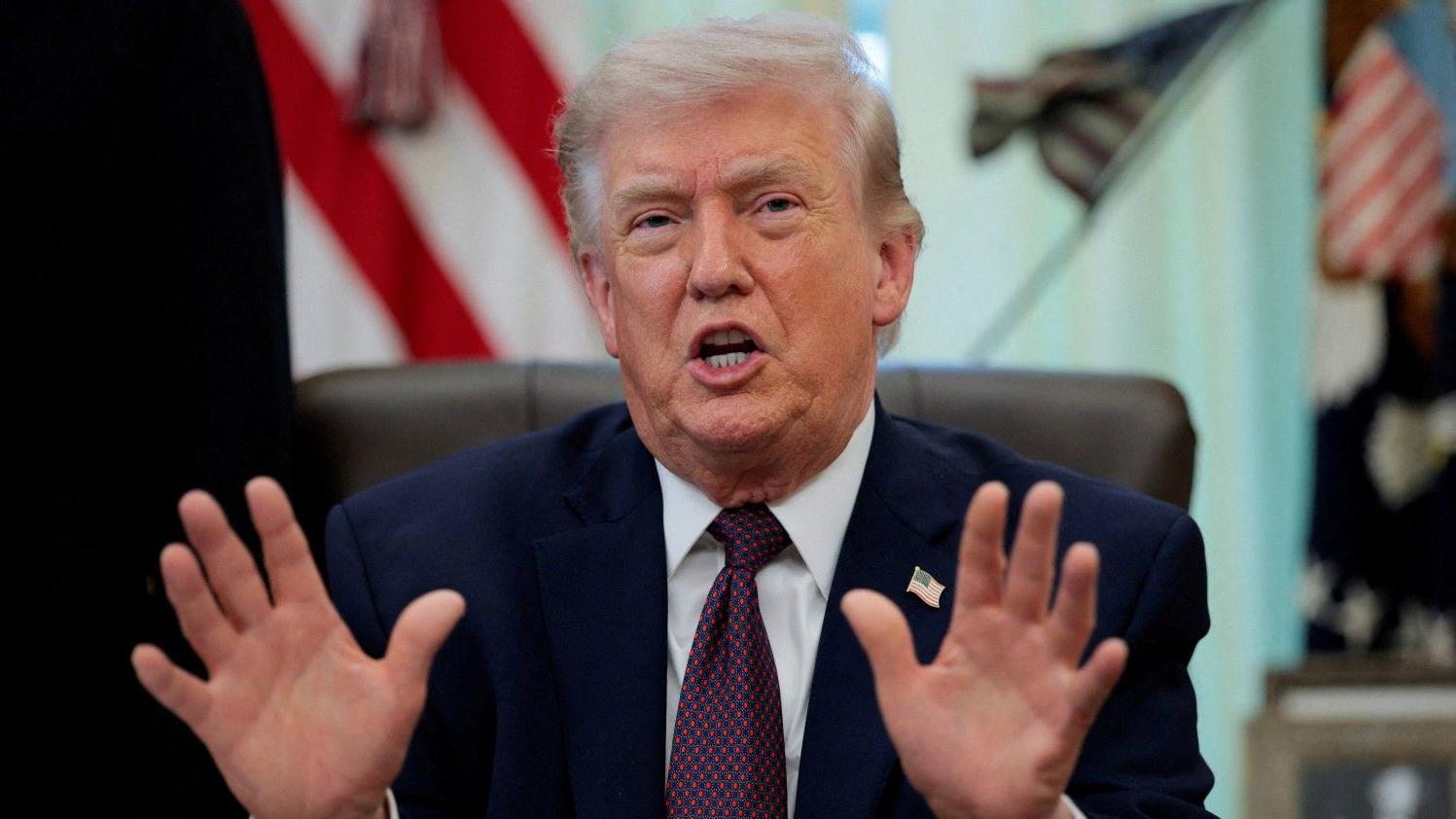
US President Donald Trump says he plans to speak with Taiwan’s President Lai Ching-te about a possible arms deal, a move that would mark a major break from decades of diplomatic practice.
US and Taiwanese leaders have not held direct talks since 1979, when Washington formally ended diplomatic ties with Taipei and recognised Beijing as the government of China.
The possible call comes as Taiwan is increasing its defence preparations amid growing pressure from China, which claims the island as part of its territory and has not ruled out using force.
Arms Deal Remains Under Review
Trump said on Wednesday that he had not yet made a final decision on a reported $14bn arms package for Taiwan. The package is said to include anti-drone systems and air-defence missiles.
When asked whether he would speak with Lai before deciding on the sale, Trump said he would talk to him and added that he speaks with everyone while working on what he called the “Taiwan problem”.
The United States is legally required under the Taiwan Relations Act to help Taiwan maintain the ability to defend itself. However, Washington must also balance that support with its sensitive relationship with China.
China Objects to US-Taiwan Contact
Beijing quickly criticised the possibility of a Trump-Lai conversation. China’s foreign ministry said it strongly opposes official exchanges between the United States and Taiwan, as well as US arms sales to the island.
Chinese officials urged Washington not to send what they described as the wrong signal to Taiwan’s separatist forces.
Taiwan, meanwhile, said Lai would be willing to discuss ways to maintain peace and stability in the Taiwan Strait. Lai has repeatedly described Taiwan as a sovereign and democratic country, while stressing that peace should not be traded away.
Taiwan Remains a Major US-China Flashpoint
Trump’s comments came shortly after his two-day summit with Chinese President Xi Jinping in Beijing. Trump described his relationship with Xi as “amazing”, but Taiwan remains one of the most sensitive issues between the two countries.
During the summit, China made clear that Taiwan is a central concern in its relationship with Washington. Xi reportedly warned that poor handling of the issue could lead to conflict between the two powers.
Trump later said he made no commitment either way on Taiwan. He also said Xi feels strongly about the island, while dismissing the idea that the issue would necessarily lead to conflict.
Trump Has Broken Protocol Before
This is not the first time Trump has departed from traditional US policy on Taiwan. In 2016, after winning the US presidential election, he spoke by phone with Taiwan’s then-leader Tsai Ing-wen. China later filed a complaint with Washington over that call.
Trump also said he had discussed Taiwan arms sales in detail with Xi, which would be another unusual shift if accurate. In 1982, the US assured Taiwan that it would not consult Beijing about arms sales to the island.
When asked about that commitment, Trump suggested that the 1980s were a long time ago, indicating he may not feel bound by past diplomatic language in the same way previous US administrations did.
Taiwan Increases Defence Spending
Taiwan has sharply increased defence spending under Lai’s leadership. His government says stronger military readiness is needed to respond to China’s growing pressure around the island.
Lai has also said US arms sales are important for maintaining regional peace and stability.
Most people in Taiwan support keeping the current status quo, where Taiwan does not formally declare independence from China but also does not unite with it.
A Sensitive Call With Global Consequences
A direct conversation between Trump and Lai would likely draw strong opposition from Beijing and could add tension to already fragile US-China relations.
For Washington, the issue is a difficult balancing act: supporting Taiwan’s defence while avoiding a deeper crisis with China. For Taipei, the possible arms deal could strengthen its security at a time of rising pressure.
Trump’s planned call may be only one diplomatic move, but it could carry major consequences for Taiwan, China, and the future of US policy in the region.