

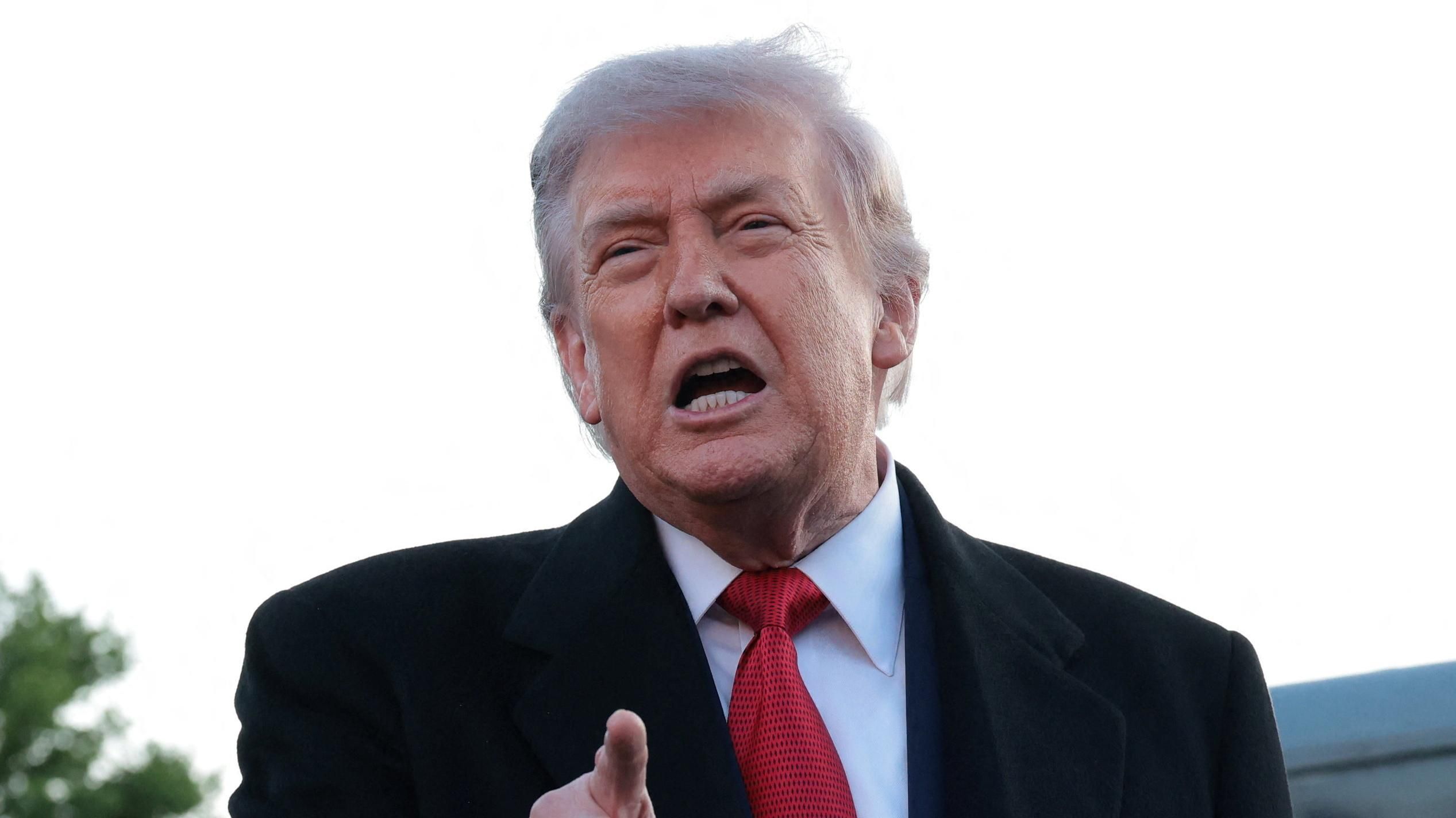
US President Donald Trump says the ceasefire between the United States and Iran is still in place, even after both sides exchanged fire late on Thursday night in and around the Strait of Hormuz.
The incident has cast new doubt over the stability of the truce, especially because it remains unclear which side opened fire first. What is clear is that both Washington and Tehran quickly accused each other of violating the agreement, while also insisting they were acting in response to aggression.
Iran’s top military command said the United States had targeted an Iranian oil tanker and another vessel nearing the Strait of Hormuz, while also launching aerial attacks on several coastal areas. The US, on the other hand, said its forces were responding to Iranian attacks on Navy guided-missile destroyers operating in the strait. Trump later said Iran had trifled with the US, but maintained that the ceasefire itself had not collapsed.
The latest confrontation came only a day after Iran’s foreign ministry said it was considering a new American proposal aimed at ending the war. That timing has made the flare-up especially significant, as it suggests diplomacy and military pressure are still unfolding side by side.
Iran and the US offer sharply different versions of events
Iranian state media first reported explosions in the Strait of Hormuz and described them as an exchange of fire with the enemy. At the same time, local media also reported explosions being heard in Tehran, further fuelling anxiety that the conflict might be widening again.
Soon after, Iran’s top military command issued a statement saying that US aerial attacks had struck coastal areas including Bandar Khamir, Sirik and Qeshm Island. Iranian officials said they responded immediately by attacking American military vessels and claimed to have inflicted significant damage. Tehran also accused Washington of breaching the ceasefire.
US Central Command rejected that version of events and described the Iranian attacks as unprovoked. According to the US military, Iranian forces launched multiple missiles, drones and small boats at American naval destroyers as they moved through the strait. The command said US forces then carried out self-defence strikes, targeting Iranian missile and drone launch sites, intelligence nodes and command facilities linked to the attack.
Centcom said it does not seek escalation, but added that it remains ready to defend American forces if necessary. That language reflected a familiar pattern: both sides signalling they do not want open war at this moment, while still preparing for more fighting if needed.
Trump warns Iran while insisting the truce still stands
Trump responded publicly in his usual forceful style, saying American forces had destroyed multiple small boats and caused heavy damage to the Iranian attackers. In a post on Truth Social, he also repeated his warning that if Iran does not sign a deal quickly, future US action would be stronger and more violent than before.
Even with that threat, Trump continued to say the ceasefire remains in place. His position appears to be that a limited military clash does not necessarily end the broader truce, especially if both sides still leave the door open to negotiations.
An Israeli source also told the BBC there was no Israeli involvement in the latest incident, suggesting the clash was seen as a direct US-Iran confrontation rather than part of a wider joint operation.
UAE attack adds to fears of wider instability
The sense of fragility deepened further early on Friday, when the United Arab Emirates Ministry of Defence said its air defences were actively responding to a missile and drone attack from Iran.
That development suggested that tensions were not limited to the strait itself and could again spill across the Gulf. Even without full confirmation of the scale of damage, the report added to fears that the ceasefire is now under severe pressure from events that neither side may fully control.
The clash also comes despite Trump recently saying the war in Iran would be over quickly. That claim now looks increasingly uncertain as military incidents continue to break through the diplomatic process.
Peace talks continue, but key disagreements remain unresolved
Behind the latest violence is a stalled but still active diplomatic effort. Reports have suggested the White House believes it may be close to a 14-point memorandum of understanding with Iran, which could create a framework for broader nuclear negotiations.
Iran has said it is reviewing the latest US proposal and plans to send its response through Pakistani mediators. Pakistan’s foreign minister has also said his country is trying to turn the ceasefire into a permanent end to the war.
But inside Iran, there are clear signs of resistance. A senior member of parliament has already dismissed the proposed 14-point understanding as little more than a wish list. Another senior parliamentary figure warned that Iran has its finger on the trigger and would respond harshly if the US failed to meet its conditions.
That means the diplomatic track remains open, but deeply uncertain. Both sides continue to talk about peace while also threatening escalation if their demands are not met.
Nuclear issue still blocks a final deal
One of the biggest unresolved issues remains Iran’s nuclear programme. Trump has repeatedly claimed that Iran has agreed never to have a nuclear weapon, but Tehran has not publicly confirmed that point.
The nuclear question continues to be one of the hardest obstacles in the talks, and it remains closely tied to the broader question of whether the ceasefire can turn into a real settlement or simply delay another round of war.
For now, the latest clash in the Strait of Hormuz shows just how unstable the situation remains. Trump says the ceasefire still stands, but the exchange of fire, the UAE alert, and the hardening rhetoric from both sides all suggest that the line between truce and renewed conflict is becoming dangerously thin.