

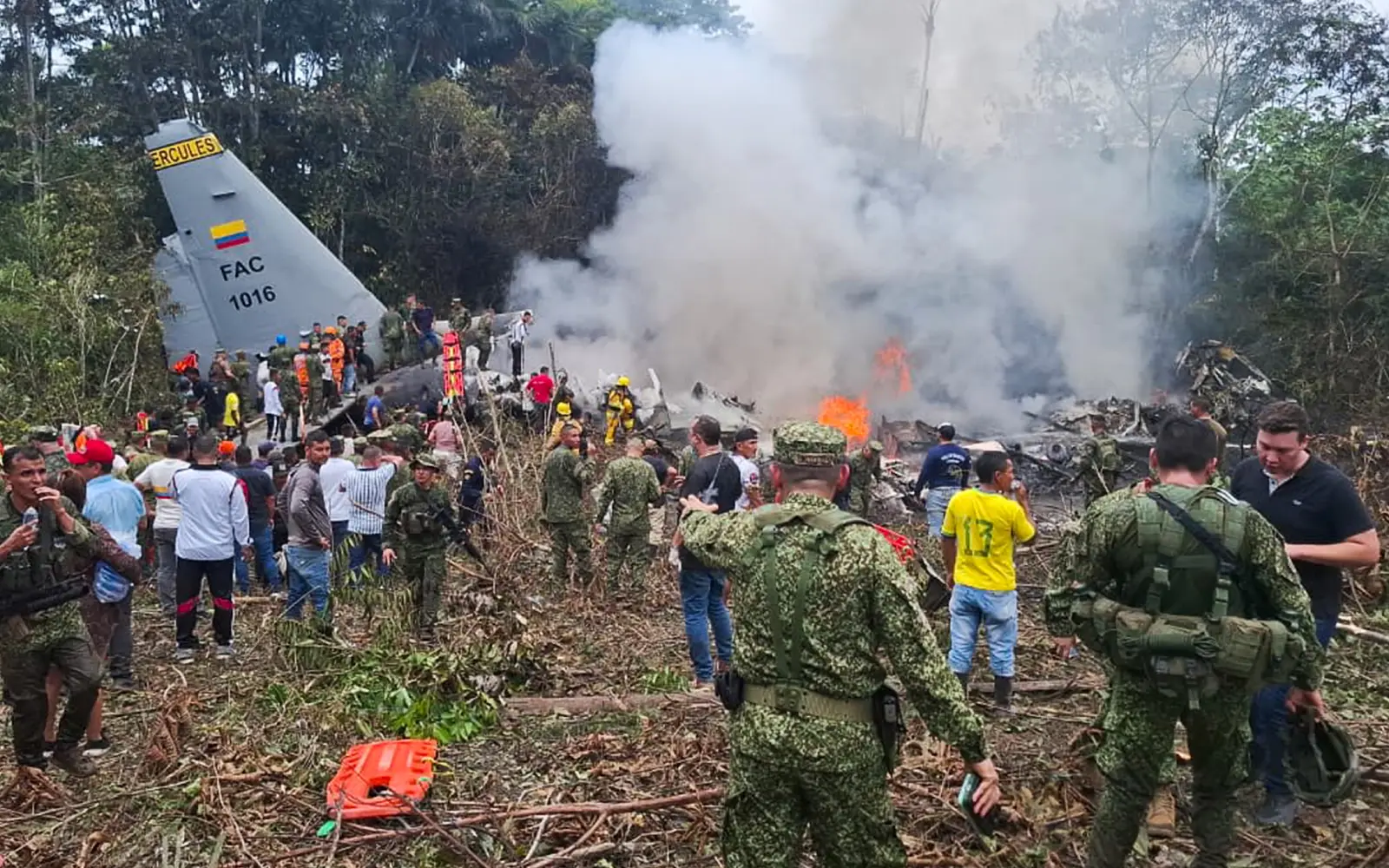
A powerful bombing on a highway in southern Colombia has killed at least 14 people and seriously injured dozens more, including children, in an attack authorities say was carried out by guerrilla insurgents.
The explosion struck in the Cauca region, leaving behind wrecked vehicles, scattered debris and deep damage across the road. Videos shared from the scene showed the scale of the destruction, with multiple vehicles overturned and the highway turned into a zone of chaos.
Colombian President Gustavo Petro said the attack was the work of rebels linked to dissident factions of the Revolutionary Armed Forces of Colombia, or Farc. In a strongly worded statement, he described those responsible as terrorists, fascists and drug traffickers, and said he wanted the country’s best soldiers sent to confront them.
The bombing has added to growing concerns over security in Colombia, especially as the country heads into a tense presidential election period.
Authorities Say Dissident Farc Factions Are to Blame
Petro’s accusation points to long-running instability involving Farc splinter groups. Although the Colombian government signed a peace deal with Farc in 2016 that led thousands of fighters to demobilise, some factions rejected the agreement and continued operating outside the process.
Those breakaway groups remain active in several parts of the country and are often linked to drug trafficking and organised violence. The latest attack in Cauca is now being seen as one of the most serious incidents in a region already struggling with repeated armed actions.
Local Governor Octavio Guzman described the bombing as indiscriminate and said Cauca cannot be left to face this level of violence alone. His remarks reflected growing frustration among regional officials who say the area is under relentless pressure from armed groups.
Witnesses Describe Powerful Blast and Widening Violence
People at the scene said the force of the explosion was so strong that it threw some of them several metres away. The images and witness accounts underline the scale of the blast and the fear it created among residents and travellers in the area.
Authorities also reported a series of smaller attacks in Cauca since Friday. According to the governor, one of those incidents targeted a military base in the city of Cali and left two people injured.
Defence Minister Pedro Arnulfo Sánchez said another major attack may have been avoided earlier in the day when a bus filled with explosives failed to detonate in the same region. He linked that attempted bombing to members of a drug-trafficking cartel.
Taken together, the incidents suggest a wider wave of violence rather than an isolated act, raising fears that armed groups are intensifying their operations in strategic parts of the country.
Security Crisis Collides With Presidential Campaign
The latest violence comes just one month before Colombia’s presidential election on May 31, giving the attack immediate political weight.
Petro, a former guerrilla fighter himself, has spent much of his presidency pursuing a controversial peace strategy that aimed to negotiate with multiple armed groups. That approach included intermittent ceasefires and periods of reduced violence, but efforts to bring dissident Farc groups into a stable peace process have largely failed.
With his term ending later this year, the security situation is now becoming a major issue in the election campaign. Left-wing candidate Ivan Cepeda, who has Petro’s backing, has called for more negotiations with rebel groups.
Meanwhile, opposition candidates on the right, including Paloma Valencia and Abelardo De la Espriella, have promised a much harder military response and a crackdown on insurgent organisations.
Attack Highlights Colombia’s Unfinished Conflict
The bombing in Cauca is a stark reminder that Colombia’s conflict did not end with the 2016 peace agreement. While that deal was historic, it left behind armed factions that continued to fight, expand criminal networks and challenge the state in vulnerable regions.
Now, with civilians killed, minors among the injured and more attacks being reported, the violence has once again exposed how fragile security remains in parts of the country.
As Colombia moves closer to election day, the Cauca bombing is likely to sharpen debate over whether the country needs more dialogue with armed groups or a tougher security strategy. For many Colombians, the immediate reality is simpler and more painful: another deadly attack, more lives lost and renewed fear about what may come next.